
Google’s introduction of the AI Overview local pack is quietly reshaping local search visibility — and many brands haven’t fully grasped the consequences yet. Traditionally, when someone looked for a service nearby (like “plumber near me”), Google would show a three-pack of business listings with map pins, reviews, and call buttons. That classic local pack was the gateway to visibility, clicks, and conversions for countless businesses.
Now, AI-generated overviews powered by Google’s generative models are increasingly replacing or reshuffling that local pack. Instead of a list of businesses, users often see a concise AI summary that highlights one or two businesses or offers direct summary information — and this change is already leading to significant visibility drops for many local brands.
For marketers, business owners, and SEO professionals, this shift presents both strategic challenges and practical opportunities. Visibility in AI summaries is quickly becoming a new layer of search optimization — one that requires different metrics, different signals, and fundamentally different optimization tactics.
Why the AI Overview Local Pack Matters for Visibility
The local pack has long been a cornerstone of local SEO. When a user searches for a local service or business, the local pack appears prominently at the top of search results, often driving the majority of clicks and engagement.
But AI Overviews are different.
From Local Pack to AI Synopsis
Instead of showing a traditional map with multiple listings, Google’s AI Overview may:
- Provide a text summary that synthesizes information from multiple sources
- Include only one or two featured businesses instead of three or more
- Surface information without showing normal call buttons or business links
- Shift organic user attention away from listing pages toward the AI content itself
This change fundamentally shifts how users interact with search results.
When users see a concise answer at the top of a results page, they may stop scrolling or clicking — a behavior often referred to as zero-click search.
What the Data Shows: Visibility Drops and Their Impact
Early signals from local SEO practitioners and platforms reveal tangible impact:
- Businesses have reported visibility declines of 50% or more when AI Overviews show instead of the traditional local pack.
- AI local packs appear on roughly 8% of local keyword searches and growing.
- Local SEO tools indicate that the presence of AI Overviews is increasing month over month in 2026.
Users no longer always see the familiar three-listing map pack. Instead, they see responses that AI generates by aggregating multiple sources, often with only one or two businesses cited — leaving others invisible, even if they were previously ranking well.
This is especially problematic for businesses that depend on Google Business Profile clicks for visibility, leads, and phone calls. When the AI Overview replaces the local pack, click-through rates (CTR) can drop significantly because many users simply don’t scroll past the summary.
How AI Overview Local Packs Differ from Traditional Local Search
To understand the visibility drop, it helps to break down the functional differences:
👇 Traditional Local Pack
- Appears with a map showing three businesses
- Includes clickable phone numbers and links
- Shows ratings and proximity
- Supports discovery through user interaction
🤖 AI Overview Local Pack
- Replaces the local pack with an AI-generated summary
- Often shows only one or two businesses
- May omit clickable call buttons or direct links
- Pulls information from multiple sources (maps, reviews, social feeds)
The result is a compressed local search experience where traditional markers of visibility — ranking positions, map pins, and review prominence — are overshadowed by the AI’s interpretation of relevance and trust signals.
Why This AI Overview Local Pack Shift Is Happening Now
Google’s AI Overview rollout isn’t random. It reflects broader shifts in how search engines are delivering answers in 2026:
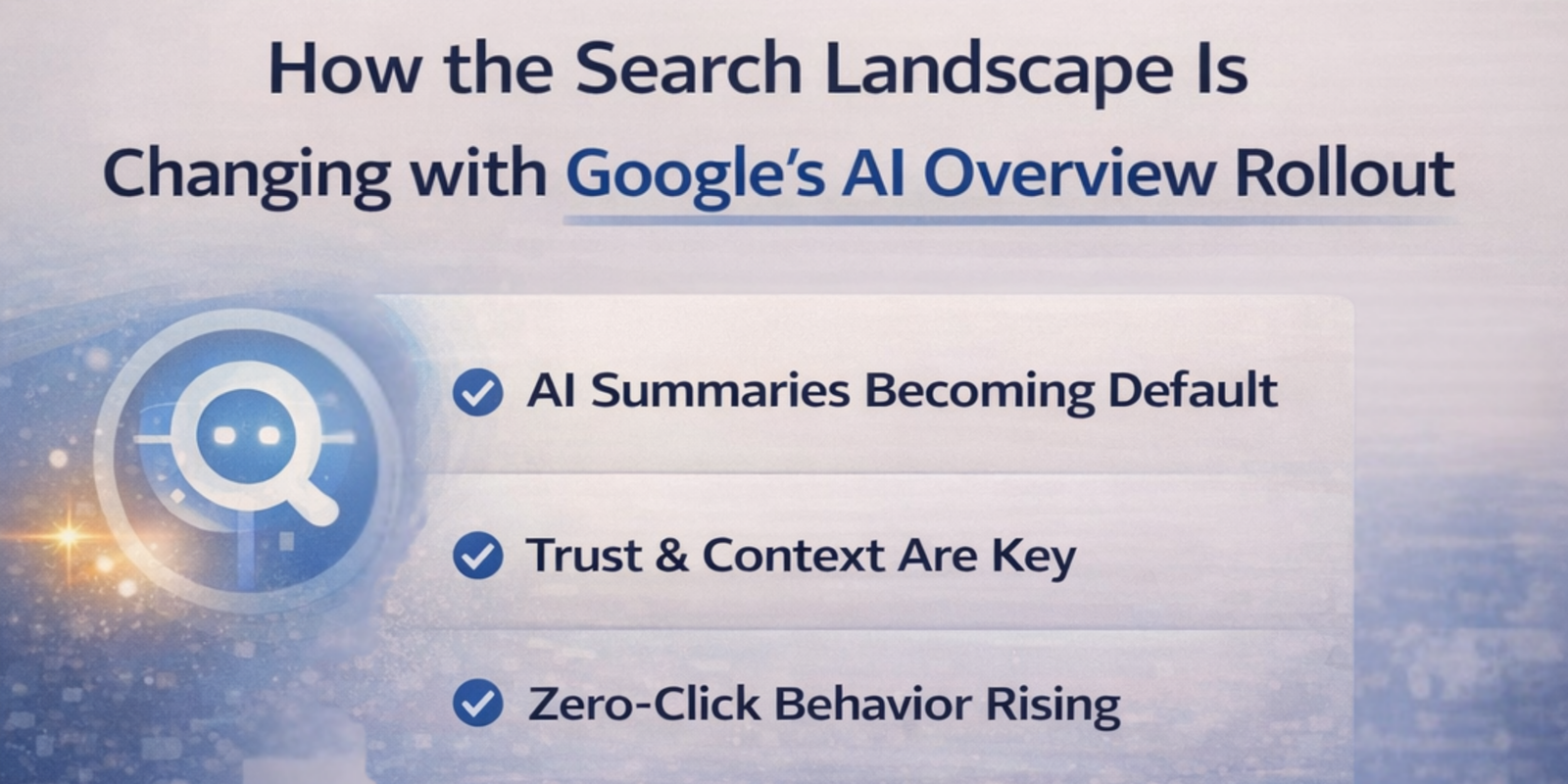
- AI Summaries Are Becoming Default for Many Queries
AI Overviews now appear much more frequently across search types. In some reports, AI summary features are present in significant portions of all searches, and while local queries historically had lower AI overview rates, that is changing.
- AI Interpretation Prioritizes Trust and Context
AI models like Gemini pull information from various sources — official profiles, reviews, third-party sites, and structured data — to generate a consolidated answer. This differs from traditional local SEO signals (proximity, categories, citations) and places new weight on trust signals and cross-platform data consistency.
- Zero-Click Behavior Is Increasing
Users commonly get complete answers within the AI summary without needing to click through. This zero-click pattern reduces visibility for traditional links and listings, even when they rank well organically below the fold.
Practical Strategies to Regain Visibility in AI-Driven Local Search
The good news is that the AI Overview local pack doesn’t make local SEO irrelevant. It raises the bar for visibility, but it also provides new strategic levers brands can use.
🔹 1. Ensure Your Google Business Profile Is Fully Optimized
AI Overviews still pull core information from Google Business Profiles — but they also look beyond. Ensure your listing has:
- Complete business details
- Updated contact information
- High-quality images
- Frequently updated posts and updates
Consistency is crucial because AI systems scan multiple data points to form their summaries.
🔹 2. Strengthen Cross-Platform Signals
AI Overviews pull context from external sources like Yelp, Tripadvisor, social channels, and review platforms. Your brand must ensure:
- Accurate business citations across third-party platforms
- Strong review ecosystems on major directories
- Consistent brand data across all online channels
This increases the chance that AI models will confidently cite your business in the summary.
🔹 3. Create Local Content With Intent
Traditional local SEO tactics focused heavily on category pages and service listings. Today’s environment requires content that addresses actual user questions such as:
- “What plumber services do I need after a flood?”
- “How to choose a roofing contractor near me”
- “Why choose X service provider in [city]”
Content optimized for user intent — not just keywords — is more likely to be referenced by AI systems.
🔹 4. Use Structured Data Markup
Structured data (schema markup) helps machines understand the context of your content — part of broader content SEO optimization that improves visibility across both traditional and AI search. For local businesses, this means implementing:
- LocalBusiness schema
- Review and rating schema
- Service schema
- FAQs and how-to schema
These enhancements increase the chance that your business gets recognized as a credible source in AI summaries.
🔹 5. Track AI Appearance Metrics
Traditional SEO tools track ranking positions. Now, brands should begin monitoring:
- Whether AI Overviews appear for target keywords
- How often your business is cited in those overviews
- Visibility changes over time across queries
Emerging tools now allow tracking of AI overview visibility specifically, offering insights into what’s being shown and who’s being cited.
Adapting Your SEO Strategy for AI Search in 2026
The AI overview local pack represents a fundamental shift in search visibility paradigms. Brands can no longer rely solely on ranking positions or map pack dominance. Instead, visibility now also depends on whether AI systems confidently interpret your brand as a trusted, relevant, and well-structured source.
This means expanding local SEO strategies toward answer optimization, cross-platform consistency, and content that directly serves user intent. Those who adapt early will benefit from broader visibility not just in traditional SERPs, but in the AI-mediated search experiences that users increasingly rely on.
Conclusion
Google’s AI Overview local pack is transforming local search. By replacing or reshuffling the traditional local pack, AI summaries are driving significant declines in visibility for some businesses — sometimes exceeding 50% drops — as attention shifts toward concise synthesized answers.
For brands and marketers, this means rethinking visibility beyond organic rankings. Local success in 2026 depends on being found in AI summaries — which requires optimizing your profiles, signals, content, and data consistency across platforms.
The businesses that invest in trust signals, structured content, and intent-based visibility are the ones most likely to thrive. As Google’s AI enhancements continue to expand, adapting to this new landscape will define visibility and competitive advantage for the next decade.
To stay ahead in AI search visibility, explore more insights on Digital Pocket News and learn how leading brands are preparing for the next era of search discovery.