
In 2026, B2B marketers are no longer struggling to reach audiences. They are struggling to prove influence.
Account-Based Marketing (ABM) combined with paid social once promised precise targeting and measurable growth. But today’s buying journeys are longer, more anonymous, and increasingly shaped by AI-assisted research. Decision-makers interact with brands across multiple channels before ever speaking to sales, making attribution far more complex.
That is why many teams are rethinking how they use LinkedIn Ads within ABM programs. The goal is no longer just lead generation. It is visibility inside the right accounts, trust-building across buying groups, and measurable contribution to revenue — even when clicks don’t tell the full story.
This shift is forcing marketers to adopt new frameworks, new metrics, and new expectations of what “performance” actually means.
The Shift From Lead Generation to Account Influence
Traditional B2B campaigns focused on capturing individual leads.
ABM in 2026 focuses on influencing entire organizations.
Modern buying committees often include:
- 6 to 12 stakeholders
- Technical evaluators and financial approvers
- AI-assisted research shaping early perceptions
- Invisible research phases before form fills
This means your ads may be working even when conversions appear low.
Instead of asking:
“Did this campaign generate leads?”
Marketers must ask:
“Did this campaign move target accounts closer to a decision?”
That distinction defines ABM success in 2026.
Why LinkedIn Ads Remain Central to B2B ABM Strategies
Despite growing ad fragmentation, the platform continues to offer one critical advantage: deterministic professional identity data.
In an era where cookies are fading and behavioral tracking is less reliable, being able to target by:
- Job role
- Seniority
- Industry
- Company
- Buying committee relevance
has become more valuable, not less.
ABM programs rely on this precision to ensure messaging reaches the exact stakeholders influencing decisions — not just anonymous traffic.
The Measurement Problem Marketers Are Facing in 2026
One of the biggest frustrations among B2B teams is the widening gap between campaign activity and reported ROI.
Here’s why attribution feels broken:
- Buyers research privately using AI tools before engaging
- Multiple stakeholders see ads but only one converts
- Sales conversations happen weeks after marketing exposure
- Traditional last-click models ignore influence-driven engagement
As a result, marketing appears less effective on paper — even when it is shaping pipeline outcomes behind the scenes through stronger SEO KPIs that reflect broader engagement.
The solution is not more tracking.
It is smarter measurement.
From Click-Based Metrics to Buying-Group Signals
In 2026, advanced ABM teams are replacing surface-level KPIs with influence-based indicators.
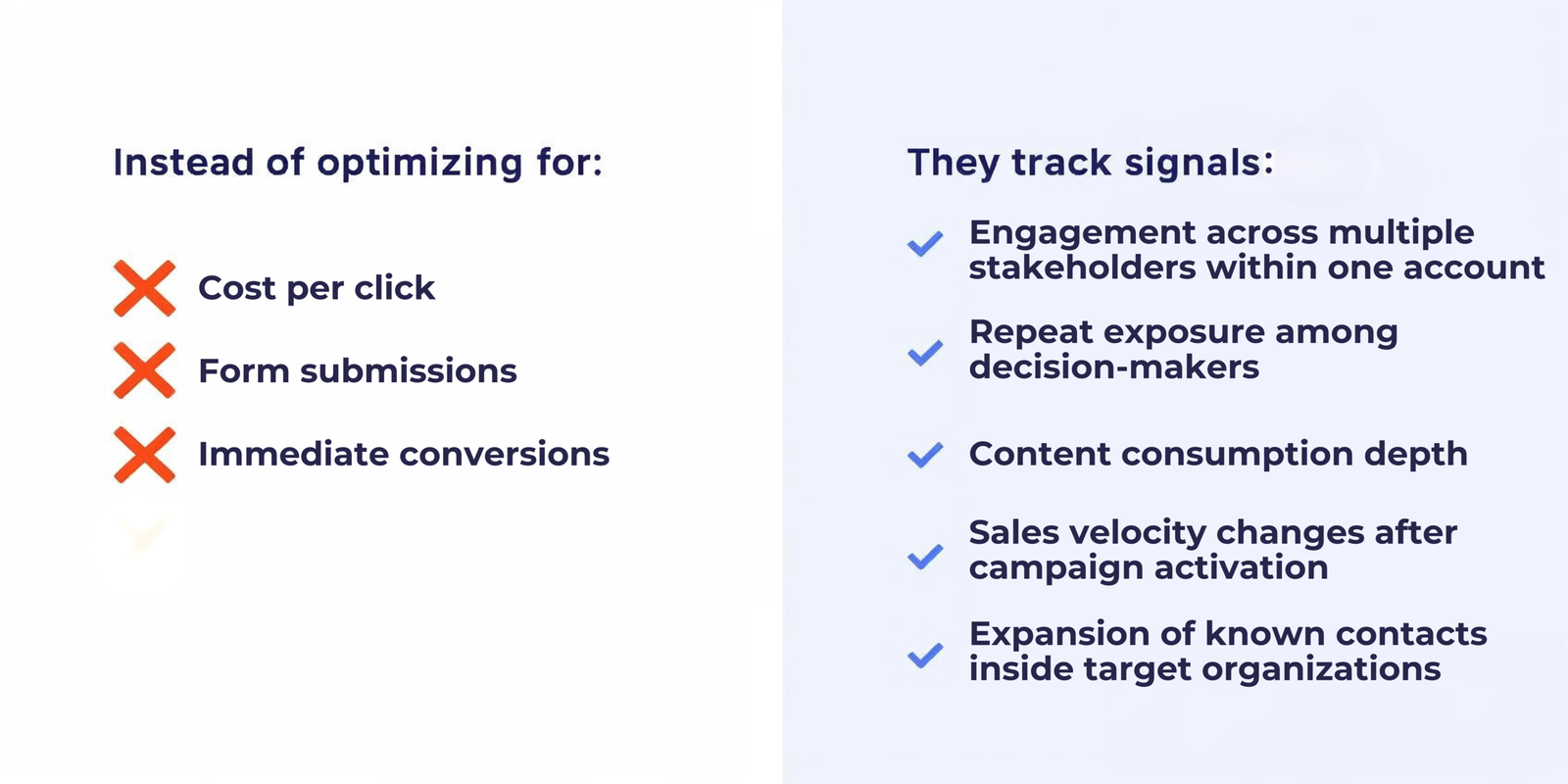
These signals better reflect how enterprise buying actually happens.
Creative Strategy Has Moved From Promotion to Education
Another major change is how ads are written.
High-performing ABM creative now behaves less like advertising and more like insight distribution.
Winning campaigns focus on:
- Teaching something valuable
- Framing a business problem clearly
- Sharing research-backed perspectives
- Challenging assumptions buyers already hold
This aligns with how modern professionals consume information — especially when AI tools summarize content before users ever click through.
Ads that feel like thought leadership travel farther within organizations than promotional messaging — much like today’s best SEO strategies that emphasize value over clicks.
AI Is Quietly Reshaping B2B Ad Engagement
AI-driven discovery is influencing how professionals evaluate vendors long before engaging directly.
Buyers now:
- Use generative AI tools to shortlist providers
- Validate vendor credibility through third-party content
- Encounter brand messaging indirectly via summarized insights
- Enter sales conversations already informed
This compresses traditional awareness stages.
Your ads must now reinforce credibility, not just introduce your brand.
That is why messaging consistency across ads, owned content, and external visibility matters more than campaign frequency.
Aligning Sales and Marketing Around Shared Account Intelligence
One of the biggest unlocks for ABM success in 2026 is tighter collaboration between marketing and sales teams.
High-performing organizations no longer treat ads as a top-of-funnel activity.
They treat them as account intelligence tools.
Marketing teams share:
- Engagement insights from specific companies
- Content themes resonating with stakeholders
- Signals indicating research-stage movement
Sales teams respond by:
- Personalizing outreach using those insights
- Referencing shared industry challenges
- Entering conversations with contextual awareness
This alignment transforms ads into conversation starters — not just awareness drivers.
Budget Efficiency Now Comes From Focus, Not Scale
In earlier years, marketers tried to scale ABM reach aggressively.
In 2026, efficiency comes from narrowing focus.
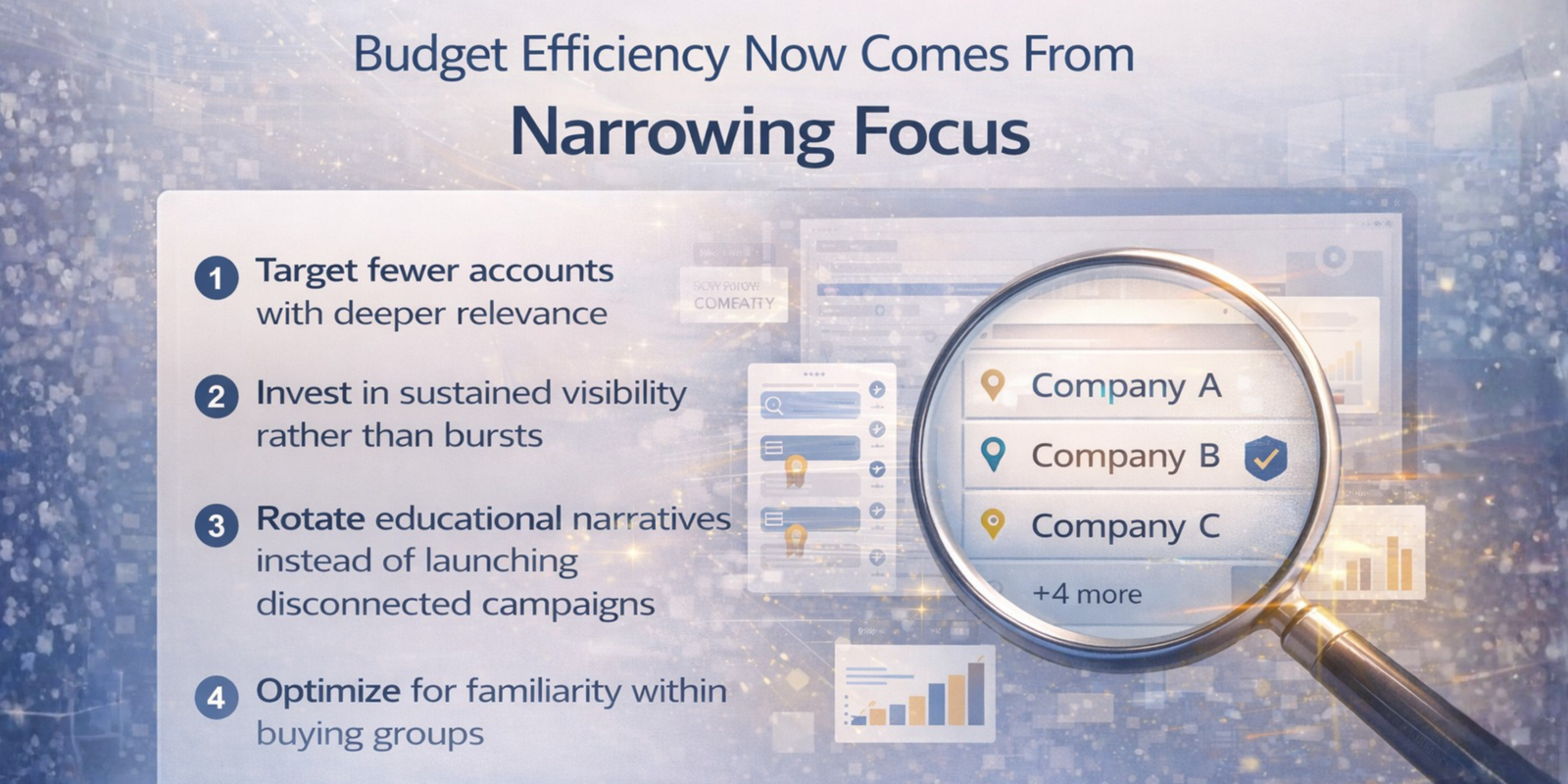
The objective is to become recognizable to the right companies — not visible to everyone.
This approach often reduces wasted spend while improving deal quality.
The New Role of Content Inside Paid ABM Campaigns
Content is no longer the destination after a click.
It is the fuel that makes ABM advertising credible.
High-impact campaigns integrate:
- Research-driven articles
- Industry analysis
- Problem-focused explainers
- Executive-level insights
This allows ads to act as distribution channels for expertise, reinforcing trust across multiple exposures.
In many cases, decision-makers never download a resource.
They simply absorb enough insight to shape vendor perception.
What Marketers Must Change to Prove Impact in 2026
To demonstrate value, B2B teams need to rethink both reporting and expectations.
Key shifts include:
- Redefining Success Metrics
Move from lead counts to account progression indicators. - Tracking Influence Windows
Measure impact across longer sales cycles rather than campaign timelines. - Integrating CRM and Engagement Data
Combine ad exposure insights with pipeline movement analysis. - Prioritizing Message Consistency
Ensure ads reinforce the same narrative buyers see elsewhere. - Educating Leadership on Modern Attribution
Executives must understand that influence precedes measurable action.
Without these changes, ABM programs risk being undervalued despite driving real revenue outcomes.
Why 2026 Is a Turning Point for B2B Advertising Strategy
The convergence of AI-assisted research, privacy shifts, and complex buying dynamics has fundamentally changed how marketing effectiveness is evaluated.
Advertising is no longer about generating immediate demand.
It is about shaping informed demand already forming inside organizations.
Platforms that provide verified professional context remain essential because they anchor campaigns in real business identities rather than anonymous behavior.
This makes ABM not just a tactic, but a coordination layer between visibility, credibility, and sales readiness.

Conclusion: Proving Impact Means Understanding Influence
B2B marketers in 2026 are operating in a landscape where visibility does not always translate into clicks — and clicks do not always represent value.
ABM combined with precision advertising works best when measured through the lens of influence:
Who saw your message, how often, and whether it changed how they think about a problem.
Organizations that adapt to this model are finding stronger alignment between marketing activity and pipeline outcomes. Those that cling to outdated attribution models risk underestimating the very programs driving their growth.
The future of B2B marketing is not about generating more noise.
It is about creating sustained relevance inside the accounts that matter most.
And in that environment, proving impact is less about tracking everything — and more about understanding what truly moves decisions forward.
To stay ahead explore more insights on Digital Pocket News for trends shaping 2026 and beyond.