The Siri & Gemini Deal marks one of the most significant shifts in AI search in years, reshaping how people discover information, interact with brands, and make decisions across Apple devices. With Apple’s latest partnership with Google to power Siri using Gemini — Google’s advanced AI model — the way iOS users discover information, interact with brands, and make decisions is evolving rapidly. This isn’t just a tech upgrade; it’s a structural reframe in how AI answers questions, interprets queries, and delivers visibility for brands.
Reportedly, Apple and Google have formalized a multi-year collaboration that places Gemini at the core of Siri’s next-generation intelligence, marking a significant milestone for both companies. Gemini’s integration into Siri is positioned to make voice search more intelligent and responsive — moving far beyond simple command execution toward a true personal AI agent.
For advertisers and marketers, the implications are immediate and deep. Voice search queries, once limited to short phrases, are rapidly turning into complex, intent-rich conversational inputs. Visual search features are expanding, and Siri is beginning to behave less like a digital assistant and more like an intelligent curator of information. Understanding how this shift impacts visibility, engagement, and conversion is no longer optional — it’s essential.
How the Siri & Gemini Partnership Changes AI Search
The Apple-Google partnership represents more than the sum of two tech titans working together. It signifies a redefinition of visibility signals in AI search, particularly in three areas: visual search inventory, zero-click answers, and conversational intent.
Visual Search Inventory Takes Center Stage
One of the most transformative additions driven by the Siri & Gemini Deal in 2026 will be the expansion of visual discovery. Features like “Circle to Search” on iPhone, combined with protocols like the Universal Commerce Protocol, are creating new opportunities for brands — especially in commerce and product discovery.
With these features:
- Users can tap visuals and images to initiate searches directly, creating visual search inventory that bypasses text-only input.
- AI systems correlate images with product catalogs, Merchant Center inventories, and shopping APIs faster than ever.
This evolution means brands that enhance their visual metadata, images, and product schema will increasingly show up in intelligent results — even without traditional clicks. In markets where consumers rely on visual triggers, this can drive new visibility and discovery paths that didn’t exist in traditional SEO or paid campaigns.
The Zero-Click Shift Is Now Native
One of the clearest trends accelerated by the Siri & Gemini Deal is the transition away from lists of links and toward direct answers. Siri — now underpinned by Gemini — is beginning to provide direct, synthesized responses instead of blue links. These results often summarize insights, recommendations or comparisons in voice form or a visual panel, without requiring users to tap through to external sites.
This shift accelerates the trend toward zero-click search:
- Users get what they asked for without leaving the device environment.
- Brands that are cited in AI summaries earn visibility without traditional traffic.
If your brand isn’t a cited source in these generative responses, visibility and downstream traffic may decline — even if your SEO ranks remain solid. In an AI environment where attribution is measured by inclusion in answer feeds rather than hyperlink sessions, the game changes. Marketers must think beyond clicks to citation authority and AI presence.
Conversational Intent Is the New Query Frontier
Traditional keyword strategies assume that users search with short, isolated terms. But as Siri evolves into a true conversational agent, queries are becoming longer, more contextual, and more intent-rich.
Instead of: “Best running shoes”
Users will ask: “Which running shoes are best for marathon training with high heel support under $150?”
These intent-driven searches place a premium on content that:
- Addresses the why and not just the what
- Provides comprehensive, structured answers
- Anticipates follow-up questions within the same interaction
In this Generative Engine Optimization Era, traditional keyword models fall short because they were not designed to interpret layered user intentions. Advertisers must shift toward intent-based modeling, where content is structured around problems, scenarios, and decisions — not isolated search terms.
What the Shift Means for Marketers and Advertisers
The Siri & Gemini deal poses both challenges and opportunities for any business that relies on discoverability — whether through organic search, voice search, or shopping interfaces.
Redefining Visibility Metrics
In the past, marketers measured success through:
- Click-through rates
- Search rankings
- Page views
In the Siri + Gemini world, visibility also includes:
- Presence in AI-synthesized answers
- Mentions in voice responses
- Inclusion in visual search inventories
These metrics are often hidden from traditional analytics platforms. As AI becomes the primary interface for search, marketers will need new tools and frameworks to measure AI citation authority and user engagement beyond the click.
Content Must Be Structured for AI Consumption
AI systems are optimized for structured, context-rich content. This requires:
- Paragraphs that answer precise questions
- Defined subsections for intent signals
- Schema and structured data for commerce inventories
- Multimodal inputs (text + image + metadata)
Brands that optimize their content architecture for AI reading patterns instantly improve their chances of being surfaced in AI agent responses— which is why brands with smaller websites are increasingly beating enterprise players in AI search.
Commerce Optimization Will Expand Beyond SERPS
“Circle to Search” and Universal Commerce Protocol integrations signal a bridge between search and shopping. When users select visual elements (e.g., product images), Siri will:
- Pull associated product details
- Show price comparisons
- Surface merchant options
- Respond with AI-summarized offers
This changes the commerce funnel. Instead of search → SERP → click → landing page → conversion, we now see:
Visual search → AI summary → direct buy options.
Advertisers must rethink their budgets accordingly. Investments in structured product data, feed optimization, and visual metadata are becoming as important as traditional paid search and social budgets.
Practical Strategies to Align With Siri + Gemini Search
Marketers must pivot from legacy SEO habits to strategies that align with AI agent behavior. Here are practical steps to prepare:
Build Conversational-Ready Content
Write content that anticipates how users speak, not just how they type.
Practical actions:
- Use question-focused headings
- Answer FAQ-style queries within body text
- Include longer, narrative examples that mirror real user intent
These practices align closely with emerging AI-powered SEO strategies for 2026 that prioritize intent over keywords.
This increases the chance an AI agent like Siri will find your content trustworthy and cite it.
Optimize Visual and Product Metadata
For brands with product inventories or visual assets:
- Use descriptive alt text
- Upload multiple image perspectives
- Provide structured schema (Product, Offer, AggregateRating)
- Feed up-to-date data into Merchant Center
AI systems rely heavily on structured metadata for visual searches and shopping interactions.
Strengthen Authority for AI Citation
AI systems tend to reference sources that demonstrate:
- Expertise
- Trustworthiness
- Contextual relevance
Citations in authoritative third-party articles, reviews, and technical references improve your signal strength. This includes:
- Being referenced in trusted industry publications
- Earning organic mentions in AI summaries
- Creating first-party data that AI can verify
Track AI-First Visibility Signals
Standard analytics may not capture AI-level visibility. Brands should begin tracking:
- Voice assistant mentions
- AI answer citations
- Visual search engagements
- Structured data coverage
This requires a combination of analytics tools and manual verification of AI responses on devices.
Balancing Privacy and Personalization
One of Apple’s ongoing strategic commitments is privacy. The Siri + Gemini deal reportedly prioritizes user privacy by keeping sensitive data on device and leveraging private cloud compute when necessary.
This impacts how AI search works:
- Personalized responses are generated without exporting private data
- Brand interactions become more contextual
- AI agents train on real user input within privacy parameters
Marketers must adapt by ensuring their presence is discoverable without relying on invasive tracking mechanisms.
The Broader Impact on the AI Search Ecosystem
Apple’s adoption of Google’s Gemini model for Siri marks a broader industry trend — collaboration across previously siloed ecosystems. It underscores three larger shifts:
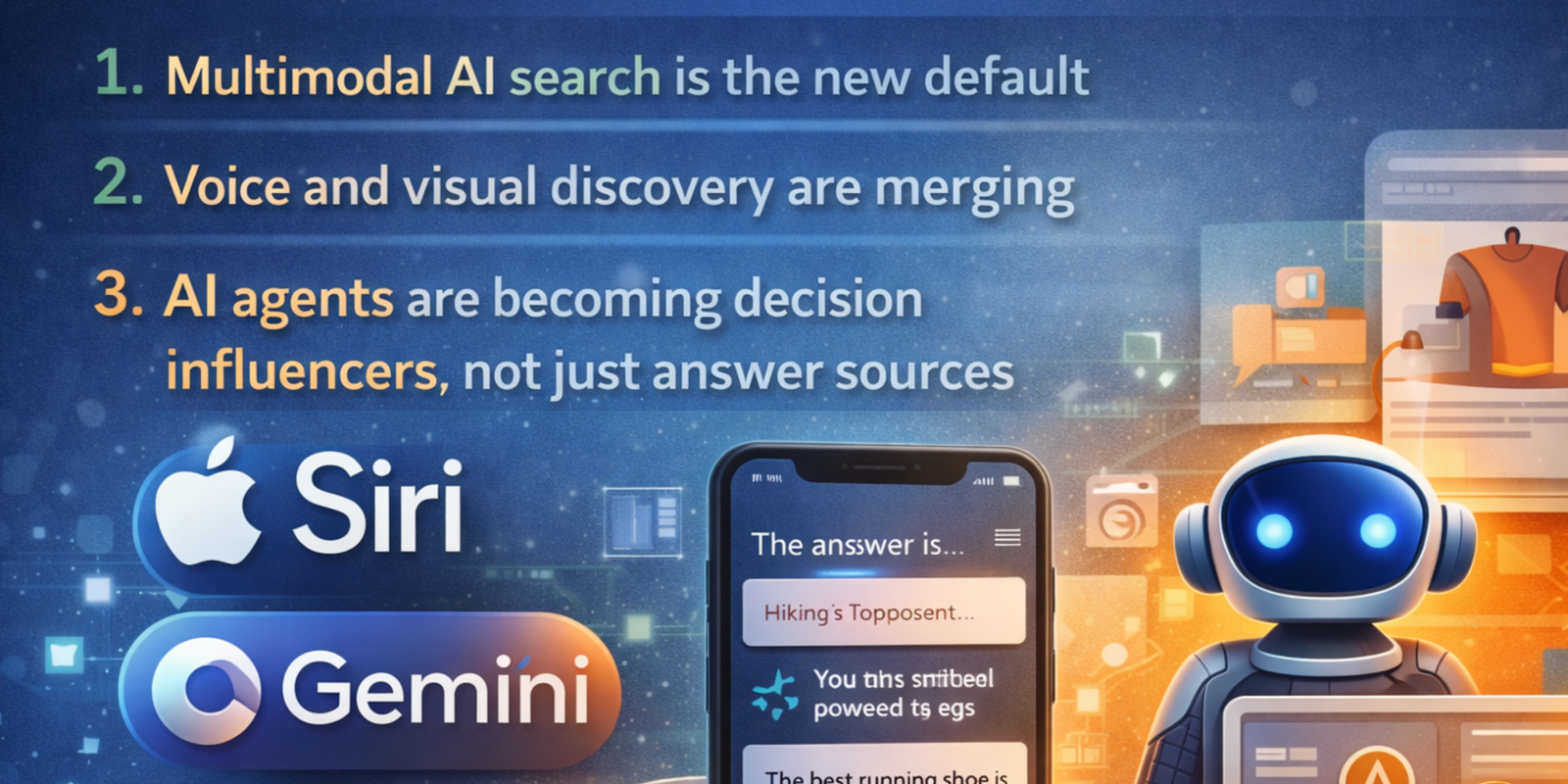
These changes are accelerating faster than most marketers anticipated and will be foundational in shaping consumer behavior throughout 2026 and beyond.
Conclusion
The Siri + Gemini deal is a defining moment in the evolution of AI search. It replaces simple voice commands with a Gemini-powered personal agent capable of understanding context, interpreting complex queries, and delivering synthesized answers. For advertisers and brands, this shift is more than a technical update — it’s a restructure of visibility, engagement, and conversion pathways.
Brands that adapt their content and commerce strategies to align with AI-first search behaviors stand to gain disproportionate visibility. Those that cling to legacy SEO habits risk becoming background noise in the new AI landscape.
Understanding how Siri now interprets intent, surfaces visual inventory, and answers questions directly is not just an advantage — it’s essential for survival in an AI-mediated search world.
This shift reinforces why brands must adopt a total search strategy beyond Google — spanning AI agents, voice platforms, and visual discovery environments.
For ongoing insights on AI search trends, SEO evolution, and how major tech partnerships are reshaping digital visibility, keep following Digital Pocket News — your guide to what’s next.