If you’re wondering how to increase website conversions without more traffic, you’re already thinking like a smart marketer. Instead of spending more on ads, optimize your existing visitors to generate more leads and sales.
Many business owners believe that more traffic automatically leads to more sales. However, that’s not always true. Even if your website attracts thousands of visitors, poor user experience or weak calls to action can result in low conversion rates.
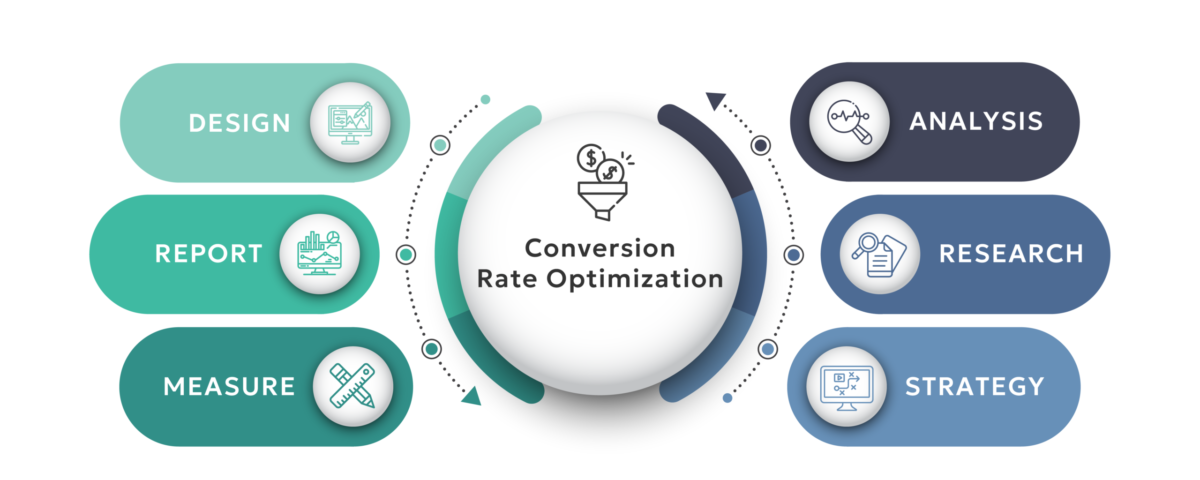
The real solution is Conversion Rate Optimization (CRO). By improving your website’s design, content, and user experience, you can get more value from the traffic you already have. As a result, you increase conversions without increasing your marketing budget.
In this article, you’ll discover 13 practical strategies to increase website conversions without more traffic
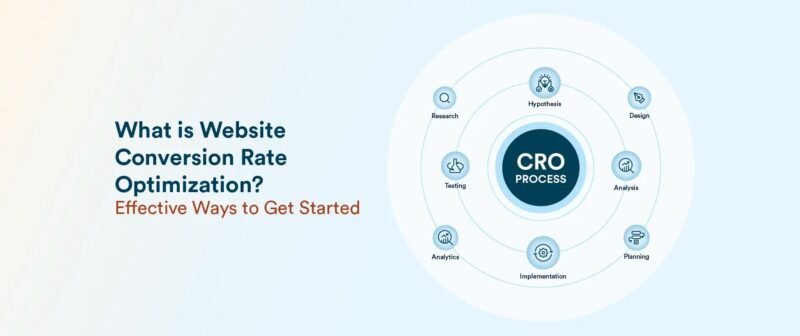
What Is a Website Conversion?
A website conversion happens when a visitor completes a desired action on your website. This could include:
- Buying a product
- Signing up for your email list
- Filling out a contact form
- Booking a call
- Requesting a quote
Choose one clear conversion goal for each page. Too many calls to action can confuse visitors and reduce your website conversions.
Your website conversion rate is the percentage of visitors who complete a desired action. For example, if 100 people visit your website and 2 make a purchase, your conversion rate is 2%. Even a small increase in your conversion rate can lead to more leads and sales without increasing your website traffic.
Why Focus on Increasing Website Conversions?
✅ Getting more traffic costs money and time. You may run ads, write content, or hire experts. But improving conversions is often cheaper and faster. You work with people who already trust you enough to visit.
✅ Here is the best part. When you double your conversion rate, you double your sales — without spending a single dollar on new traffic.
Now let’s look at proven methods.
1. Improve Your Website Loading Speed
A slow website loading speed can drive visitors away and reduce your website conversions. Most users expect pages to load quickly. Even a one-second delay can increase bounce rates and reduce sales.
Here are a few simple ways to improve your website speed:
- Compress and optimize large images.
- Choose a reliable and fast web hosting provider.
- Remove unused plugins and unnecessary scripts.
- Enable browser caching to load pages faster.
A fast-loading website keeps visitors engaged, improves user experience, and encourages them to take action. Test your website speed regularly using free tools like Google PageSpeed Insights..
2. Write Clear and Simple Headlines
- You have about 3 seconds to convince someone to stay on your page. Your headline decides it.
- Your headline is the first thing people see. If it’s confusing, visitors will leave immediately.
- Use simple language. Focus on the benefit your visitor will get. Avoid fancy words that sound smart but confuse the reader.
Example:
- Weak headline: “Innovative Solutions for Digital Growth”
- Strong headline: “Get More Customers From Your Website Today”
- The second point is clear. People instantly understand what they will get.
3. Use a Strong Call-to-Action (CTA)
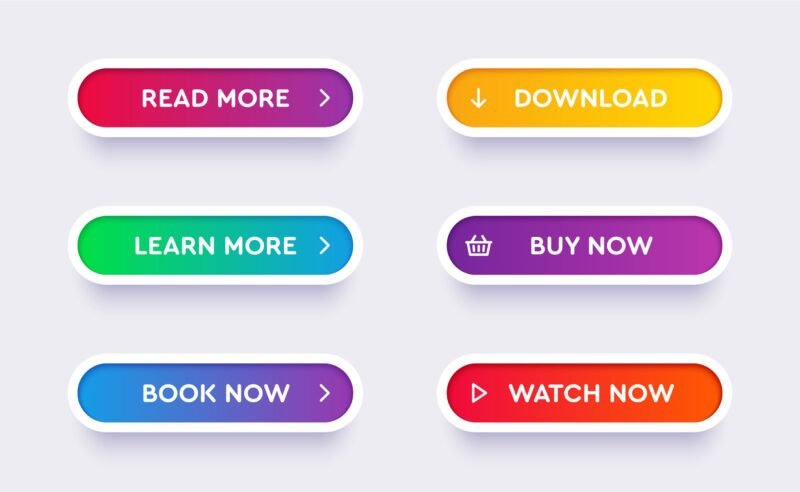
A strong call-to-action (CTA) encourages visitors to take the next step. However, if your CTA is unclear or difficult to find, you could lose valuable website conversions.
To create an effective CTA:
- Use bold colors that stand out.
- Write action-oriented phrases like “Get Started,” “Start Your Free Trial,” or “Request a Free Quote.”
- Place your CTA above the fold and repeat it where it makes sense on the page.
Examples of high-converting CTAs:
- Start Your Free Trial
- Book a Free Consultation
- Get Your Free Quote
- Download the Free Guide
According to HubSpot’s CTA research a clear and well-placed CTA reduces confusion, improves user experience, and motivates visitors to take action. As a result, it can significantly increase your website conversions.
4. Build Trust Signals to Increase Website Conversion
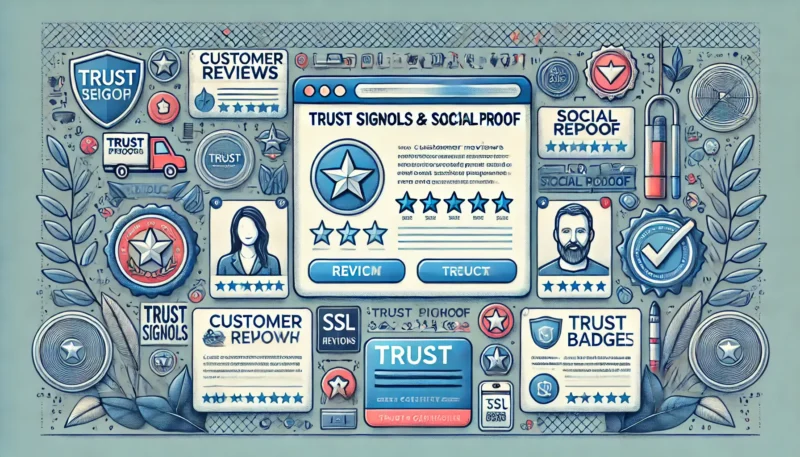
People are more likely to buy from businesses they trust. If your website looks unreliable or lacks credibility, visitors may leave without taking action. Adding trust signals in your website for potential customers.
Here are some effective trust signals to include on your website:
- Customer reviews and ratings
- Testimonials with real names and photos
- Security badges and SSL certificate.
- Money-back guarantees
- The Number of happy customers
Pro Tip: Display these trust signals on your homepage, product pages, and checkout page to maximize their impact.
5. Simplify Your Forms
- Long forms scare visitors away. Every extra field lowers your conversion rate.
- Only ask for what you really need. If you just need an email, ask only for that.
- Fewer fields mean more people finish. Test your forms and remove anything extra.
6. Improve Your Website's Mobile Experience
More than half of website visitors use mobile phones. If your site is hard to use on mobile, you are losing conversions every day.
Here are the mobile optimization checklist:
- Use a responsive design
- Make buttons big enough to tap easily
- Avoid pop-ups that block the screen
- Keep text easy to read without zooming
A smooth mobile experience directly increases conversions.
7. Use Clear and Honest Product Descriptions
Clear and honest product descriptions help visitors understand exactly what you offer. When people know what to expect, they feel more confident about making a purchase. However, vague or confusing descriptions can create doubt and reduce your website conversions.
Make sure your product or service description answers these questions:
- What does this product or service do?
- How will it help the customer?
- What makes it different from competitors?
Pro Tip: Include relevant keywords in your product descriptions to improve SEO while keeping the content easy to read.
8. Add Live Chat or Quick Support Options
- Sometimes visitors have questions before they buy. If they cannot get answers, they leave.
- Live chat helps you talk to visitors in real time. You can solve their doubts instantly.
- This builds trust and helps close more sales. Even a simple chatbot can help.
9. Use High-Quality Images and Videos
- People want to see what they are getting. Clear photos and videos help them decide.
- Show your product from many angles. Add videos that explain how things work.
- A short demo video can boost conversions a lot. It answers questions and builds trust fast.
10. Test Different Versions of Your Pages (A/B Testing)
Don’t rely on guesswork when optimizing your website. A/B testing helps you compare two versions of the same page to find out which one delivers better results and improves website conversions.
You can test different elements, such as:
- Headlines
- Call-to-action (CTA) buttons
- Button colors
- Page layout
- Images and visuals
Make one change at a time and measure the results. This approach helps you understand what your visitors respond to and make data-driven decisions.
Pro Tip: Even small improvements can have a significant impact on your conversion rate over time. Regular A/B testing helps you continuously optimize your website and increase website conversions.
11. Use Social Proof and Urgency
People follow the crowd. When they see others buying, they feel safe to buy too.
Add social proof like:
- Over 10,000 customers served
- Recent purchase notifications
- Star ratings
- Limited-time offers
For example, “Sale ends in 24 hours” creates fear of missing out. Just be honest and never fake it.
12. Reduce Distractions
- Too many links and buttons confuse people. They do not know what to do.
- Keep your pages simple and focused. Remove anything that does not help the visitor take action.
- One clear goal per page works best. Guide visitors toward one main action.
13. Optimize Your Website for SEO
✅ Getting the right visitors matters just as much as getting more visitors. If your SEO content matches what people are searching for, they are more likely to convert.
✅ Focus your content around your focus keyword and related terms your audience is actually searching for. This brings in visitors who are already interested in what you offer.
Conclusion
Increasing website conversions doesn’t always require more traffic. By improving user experience, optimizing landing pages, refining CTAs, and continuously testing, you can convert more visitors into customers. Start implementing these strategies today to maximize the value of your existing traffic.
Frequently Asked Questions
Q1. What does “increase website conversions” mean?
It means getting more visitors to take the action you want, like buying a product, filling a form, or signing up, without needing more traffic.
Q2. Can I increase conversions without spending money on ads?
Yes. Improving your website speed, headlines, CTAs, and trust signals can boost conversions without any extra ad spend.
Q3. What is a good conversion rate for a website?
Most websites see conversion rates between 1% to 5%. E-commerce sites often aim for 2% to 4%, but this can vary by industry.
Q4. How does website speed affect conversions?
A slow website makes visitors leave before they even see your offer. Faster loading times keep people engaged and more likely to convert.
Q5. Why is my website getting traffic but no sales?
This usually happens due to unclear headlines, weak CTAs, slow loading speed, complicated forms, or a lack of trust signals like reviews.
Q6. What is A/B testing and why is it important?
A/B testing means showing two versions of a page to see which one performs better. It helps you make decisions based on data, not guesswork.
Q7. Does mobile optimization really impact conversions?
Yes. More than half of all website visitors use mobile devices. A poor mobile experience directly leads to lost sales and sign-ups.
Q8. How can I build trust on my website quickly?
Add customer reviews, case studies, trust badges, and clear contact information. These simple additions make visitors feel safe buying from you.
Q9. Is urgency marketing effective for increasing conversions?
Yes, when used honestly. Phrases like “limited stock” or “offer ends soon” push visitors to act faster, but fake urgency can hurt trust.
Q10. How long does it take to see results from conversion rate optimization?
Some changes, like fixing a CTA or headline, can show results within days. Bigger improvements usually take a few weeks of testing and tracking.
Discover how leading brands are winning in AI search—only on Digital Pocket News

Digital Marketing & Project Manager with 11+ years of experience driving B2B/B2C growth. Specializes in scalable strategies that consistently deliver impressive results, including 40-80% revenue growth, 50%+ traffic boosts, and 35% MQL conversions. Proficient in digital marketing techniques such as SEO, SEM, PPC, social media, email marketing, and utilizing marketing automation tools like Marketo, HubSpot, and Salesforce. Demonstrated success in managing marketing budgets exceeding $1.3M and leading cross-functional teams to achieve 25-70% revenue and client growth. Skilled at aligning digital roadmaps with business goals for clients. Adept in data analysis and web analytics to inform decision-making. Known for pioneering AI-driven campaigns and leveraging predictive trends for a competitive edge.